A Historic Moment for Nepali Cricket
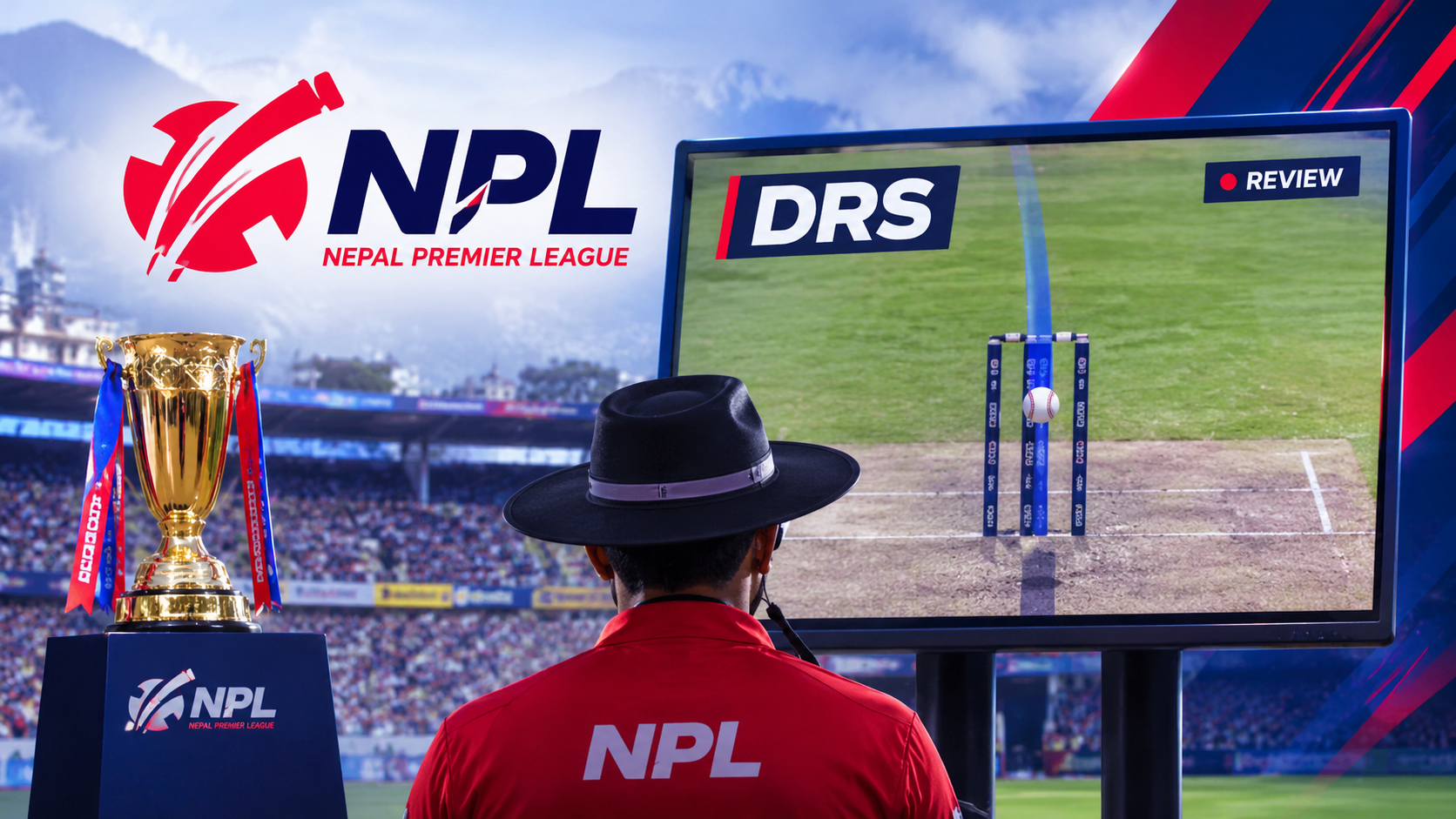
Nepali cricket has taken a major step forward with the introduction of the Decision Review System (DRS) in the third edition of the Nepal Premier League (NPL) 2026. The technology was used for the first time in Nepali cricket during the tournament's opening match on October 26 at the Tribhuvan University International Cricket Ground in Kirtipur.
The Cricket Association of Nepal (CAN) confirmed that DRS would be available throughout the tournament, giving teams an opportunity to challenge certain on-field umpiring decisions. This milestone marks an important development for a competition that continues to attract growing attention from cricket fans across Nepal.
The introduction of DRS also addresses a long-standing demand from players and supporters who have called for better ways to review close and potentially controversial decisions.
What Is DRS and Why Does It Matter?
The Decision Review System is a technology-assisted process that allows teams to request a review of eligible umpiring decisions. It helps match officials reassess important moments using video footage and specialist technology.
The DRS system introduced in NPL 2026 includes:
- 3D ball tracking: Helps officials assess the projected path of the ball in leg-before-wicket (LBW) decisions.
- Edge detection: Helps determine whether the ball has made contact with the bat.
- Run-out and stumping reviews: Provides additional evidence for decisions involving players' positions around the crease.
- No-ball reviews: Helps officials examine certain front-foot decisions.
By introducing these tools, the NPL aims to improve decision-making and provide a more reliable process for resolving disputed calls.
DRS Makes an Immediate Impact in the Opening Match
The importance of the new technology became clear during the opening match between defending champions Lumbini Lions and Sudurpaschim Royals.
Several reviews were requested during the match, demonstrating how technology could influence crucial moments. In one early incident, Lumbini appealed for a dismissal against Sudurpaschim batter Saif Zaib, but the review upheld the original not-out decision.
Later, Sudurpaschim batter Aarif Sheikh successfully challenged an on-field decision that had initially given him out. Another review resulted in Scott Kuggeleijn being given out LBW after he was initially ruled not out.
DRS also played a role during Lumbini's run chase when Niroshan Dickwella's original LBW dismissal was overturned after the review showed that the ball had made contact with his glove.
These incidents demonstrated the practical value of the system, allowing match officials to reconsider important decisions with additional evidence.
Lumbini Lions Begin Their Title Defence with a Win
The opening match delivered both a technological milestone and an impressive performance from the defending champions.
After winning the toss and choosing to bowl, Lumbini Lions restricted Sudurpaschim Royals to just 87 runs in 17.2 overs. Kishore Mahato led the bowling attack with four wickets for 23 runs, while Sher Malla claimed three wickets for 11 runs.
In response, Lumbini chased down the target comfortably, reaching 88 for three in 9.1 overs to secure a seven-wicket victory. D'Arcy Short top-scored with 40 runs off 18 balls, while Asif Sheikh contributed 32 off 25 deliveries.
The result gave Lumbini a strong start to their campaign while placing the spotlight on the new review technology.
A New Era for Nepal Premier League
The arrival of DRS represents more than a technical upgrade. It reflects the continued development of the Nepal Premier League as a competitive domestic cricket tournament.
For players, the system provides another opportunity to challenge certain decisions. For umpires, it offers additional evidence when reviewing close calls. For spectators, it adds another layer of interest to the game, particularly during decisive moments.
The tournament's growing profile also creates opportunities for Nepali players to compete alongside international cricketers and gain valuable experience in a professional franchise environment.
However, technology alone cannot eliminate every disagreement. Its effectiveness will depend on the quality of the available evidence, consistent application of the playing rules and the ability of match officials to reach timely decisions.
What This Means for the Future of Nepali Cricket
The introduction of DRS is an encouraging development for Nepali cricket. It demonstrates a willingness to adopt modern technology and strengthen the standards of domestic competition.
As the NPL continues to grow, improvements in officiating, broadcast coverage and match organisation can help create a better experience for players and supporters alike.
The real test will be whether the system consistently helps officials make accurate decisions throughout the tournament. If implemented effectively, DRS could become an important part of the NPL's long-term development.
Conclusion
The debut of DRS in the Nepal Premier League 2026 will be remembered as a landmark moment in Nepali cricket. From the opening match in Kirtipur to the crucial reviews that influenced on-field decisions, the technology has introduced a new dimension to the competition.
With the Cricket Association of Nepal embracing this development, the NPL has taken another step towards modernising domestic cricket and strengthening its reputation.
Nepali cricket has entered a new chapter—and NPL 2026 has made history.